
Login
The Rituals of the Mediterranean Living Room
The Mediterranean living room is not merely a furnished space, it is a lived-in environment shaped by light, hospitality, and everyday rituals. In Mediterranean culture, the living room forms the heart of the home: a place where time slows down, conversations unfold naturally, and comfort is never forced.
Unlike interiors designed primarily to impress, the Mediterranean living room is designed to be used. It welcomes daily life with ease, warmth, and a quiet sense of refinement.
Light as an Architectural Principle
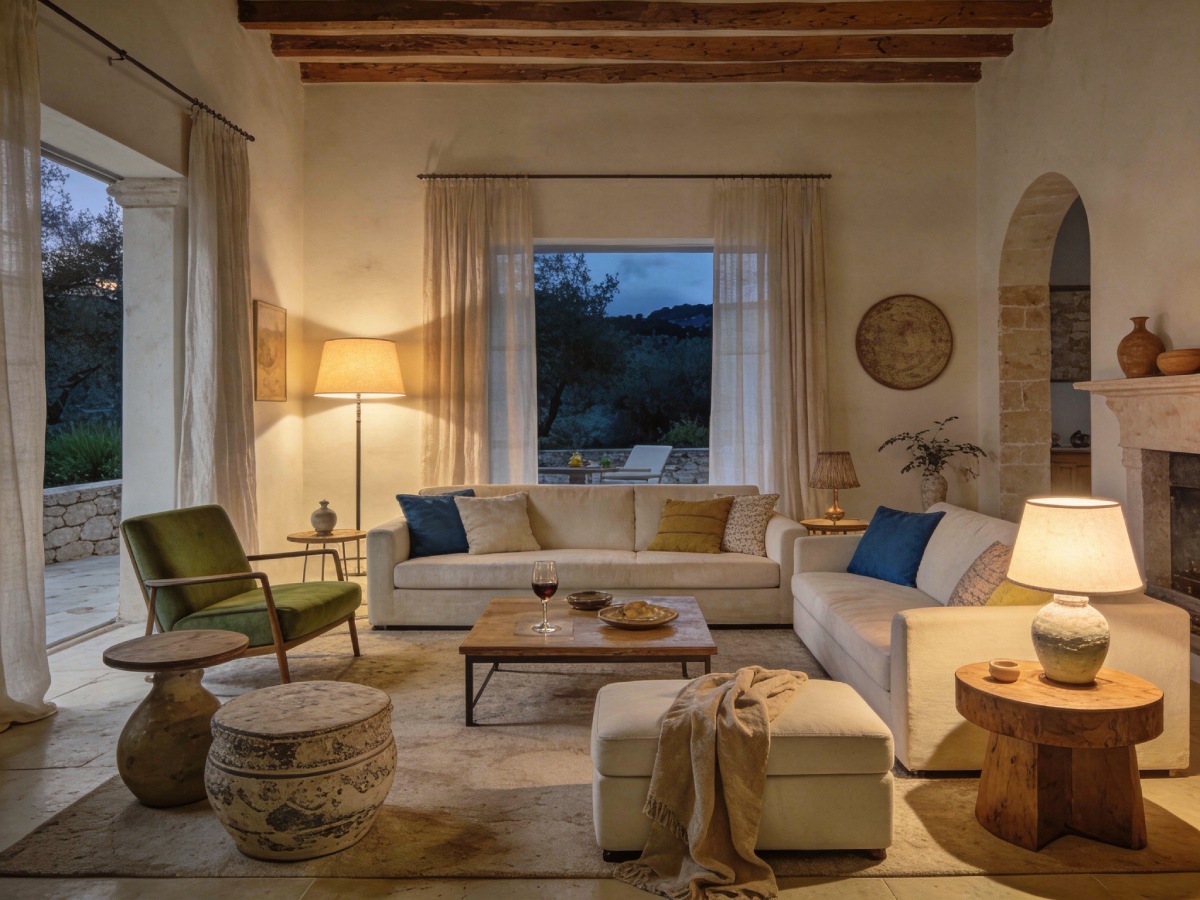
Natural light is the primary element shaping a Mediterranean living room. Seating is arranged to receive daylight rather than block it, allowing the room to evolve throughout the day.
Lightweight curtains -often linen or cotton- soften the sun instead of shutting it out. Pale tones and uncluttered surfaces amplify brightness, while in the evening, lighting shifts to a warmer, softer character. Floor lamps, table lamps, and low-intensity lighting continue the rhythm of the day, creating intimacy rather than contrast.
A Layout That Invites Connection
Mediterranean living rooms are not built around rigid symmetry. The sofa acts as a reference point, complemented by armchairs, side tables, and occasional seating that form relaxed conversation zones.
This arrangement mirrors Mediterranean social life, informal, fluid, and human. Distances between pieces are intentional: close enough for conversation, generous enough for comfort. The space does not demand attention; it invites participation.
Materials Meant to Be Touched
At the core of Mediterranean design lies an appreciation for materials with texture, warmth, and longevity. Wood, stone, linen, cotton, and ceramics dominate, not polished to perfection, but allowed to age gracefully.
Luxury here is understated. A softly wrinkled linen sofa cover, visible wood grain, or handcrafted ceramic object adds authenticity and depth. These materials celebrate use rather than resist it.
Colors Drawn from the Landscape
The Mediterranean color palette reflects its surroundings: sand, stone, olive green, sun-faded blues, and warm whites. These tones create visual calm and allow light to remain the focal point.
Color is never used for excess or drama. Instead, subtle contrasts and natural hues work together to establish balance, harmony, and continuity throughout the space.
Hospitality as a Daily Luxury
In Mediterranean culture, hospitality is not an occasion, it is a mindset. The living room is always ready to welcome, without preparation or formality.
A low table for coffee or wine, a throw casually placed over the sofa, a lamp that softens the evening atmosphere. These small gestures transform the living room into a space of effortless generosity.
A Living Room That Evolves with You
The Mediterranean living room is not static. It adapts to seasons, light, and the people who inhabit it. Its strength lies in its ability to change without losing its identity.
In a world defined by speed and excess, the Mediterranean living room remains grounded, simple, warm, and meaningful. A space that reflects life as it is meant to be lived: naturally.
 Delivery Methods
 Secure Online Payments
 24 / 7 Services
 Shiping in Greece and Worldwide